Buy celko.eu ?
We are moving the project
celko.eu .
Are you interested in purchasing the domain
celko.eu ?
domain@kv-gmbh.de · 0541-91531010
Buy celko.eu ?
What are the differences between Sanger DNA sequencing and NGS sequencing using a sequencer?
Sanger DNA sequencing is a traditional method that involves sequencing one DNA fragment at a time using chain-terminating dideoxynucleotides. It is a slower and more labor-intensive process compared to NGS sequencing. NGS sequencing, on the other hand, uses massively parallel sequencing technology to simultaneously sequence millions of DNA fragments. This allows for high-throughput sequencing and the generation of large amounts of data in a shorter amount of time. Additionally, NGS sequencing can provide more comprehensive and detailed information about the entire genome, making it more suitable for large-scale genomic studies. **
What is the SQL query for the Terra database?
The SQL query for the Terra database will depend on the specific task or information you are trying to retrieve. However, a basic SQL query to retrieve all data from a table in the Terra database would look like this: ```sql SELECT * FROM table_name; ``` Replace "table_name" with the actual name of the table you want to retrieve data from. If you want to retrieve specific columns or apply filters, you can modify the query accordingly using the SELECT and WHERE clauses. **

Similar search terms for Sequencing
Top-Angebote
Products related to Sequencing:
-
Motorola Programming Cable Motorola Programming CableStaying connected starts with gear you can trust. This 1 pc of Motorola CP200 programming cable makes it easier to program compatible radios quickly and confidently, whether you manage a fleet or maintain a few essential units. Designed for users...49,97 $*Shipping: 0,00 $Secure redirect to the provider
-
Microsoft SQL Server 2022 StandardMicrosoft SQL Server 2022 Standard Get unrivalled performance, security and flexibility with Microsoft SQL Server 2022 Standard. Designed to handle your critical business applications and complex workloads, SQL Server 2022 Standard offers a reliable and scalable data management platform. Main features: High Performance Optimises database performance with advanced analysis and query capabilities, ensuring fast response times for even the most demanding workloads. Advanced Security Protect your data with advanced security measures, including built-in encryption, strong authentication and granular access controls. High Availability and Disaster Recovery : Ensure business continuity with high availability solutions such as failover clustering, database mirroring and online backup. Facilitated Management and Monitoring It uses integrated tools for managing and monitoring database performance, simplifying maintenance and optimisation. Integration with Cloud Services Leverages the flexibility of the cloud with hybrid deployment options, allowing easy migration and scalability to the cloud. Support for Big Data : Easily integrate your relational data with unstructured data to obtain a complete and in-depth view of your business information. Compatibility and Flexibility It supports a wide range of programming languages, platforms and development tools, offering the flexibility to adapt to your company's specific needs. Microsoft SQL Server 2022 Standard is the ideal choice for companies needing a powerful, secure and versatile data management platform. Simplify your data management and improve operational efficiency with SQL Server 2022 Standard. How to download, install and activate SQL Server 2022 Standard: a step-by-step guide43,22 £*Shipping: 0,00 £Secure redirect to the provider
-
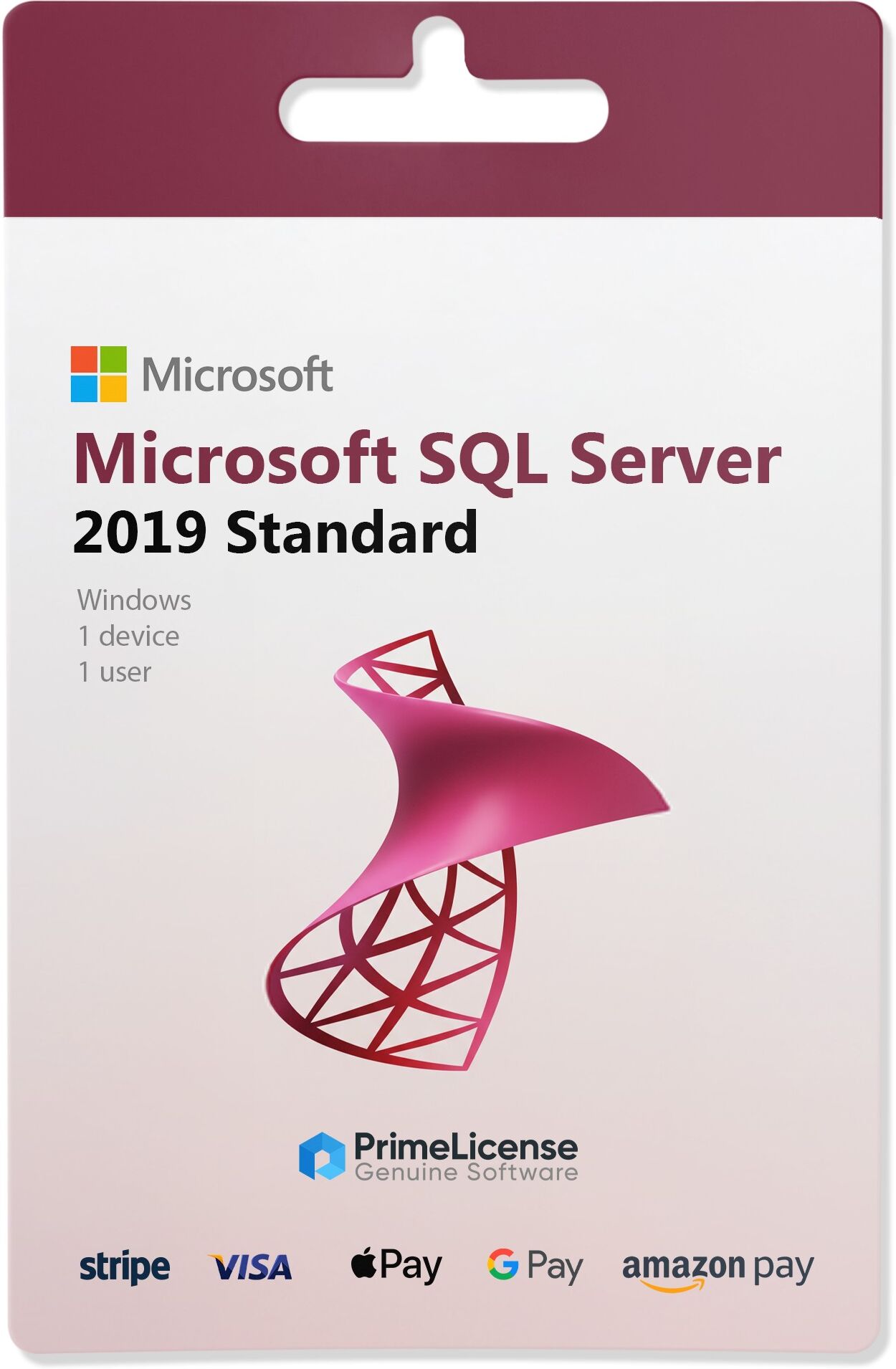
Microsoft Windows SQL Server 2019 StandardMicrosoft sql server 2019 - features and functionality SQL Server 2019 (15.x) represents an advancement over its previous versions, expanding the SQL Server platform with a wide range of choices across development languages, data types, on-premises or cloud environments and operating systems. It also introduces Big Data Clusters for SQL Server, offering additional features and enhancements for several components, including SQL Server Database Engine, SQL Server Analysis Services, SQL Server Machine Learning Services, SQL Server on Linux and SQL Server Master Data Services. Key features of Windows sql server 2019 include: SQL Server Database Engine: The Database Engine is the central service for storing, processing and securing data. It includes replication, full-text search, relational and XML data management tools, integration with analytical databases and PolyBase for accessing Hadoop and other heterogeneous data sources, as well as Machine Learning Services for running scripts in Python and R on relational data. Analysis Services: Analysis Services provides tools for creating and managing online analytical processing (OLAP) and data mining applications, supporting advanced analysis. Reporting Services: Reporting Services provides server and client components for developing, managing and distributing reports in various formats, including tabular, matrix, graphical and freeform. It is also an extensible platform that can be used for the development of reporting applications. Integration Services: Integration Services consists of a set of graphical tools and programmable objects for transferring, copying and transforming data. It also includes Data Quality Services (DQS) to improve data integrity. Master Data Services: Master Data Services (MDS) is SQL Server's solution for master data management, supporting various domains such as products, customers and accounts. It offers hierarchy management, granular security, transactions, data versioning and business rules, with an add-in for Excel for simplified data management. In-database Machine Learning Services: In-database Machine Learning Services allows distributed and scalable machine learning solutions to be implemented, leveraging corporate data. It supports R and Python, extending the capabilities introduced in SQL Server 2016. Machine Learning Server (Standalone): Machine Learning Server (standalone) facilitates the deployment of scalable machine learning solutions on different platforms, including Linux and Hadoop, supporting the R and Python languages as was already the case in SQL Server 2016. The SQL Server 2019 Standard edition provides basic data management and business intelligence database for departments and small organisations to run applications and supports common development tools for local and cloud environments, enabling effective database management with minimal IT resources. Comparison with other Windows Server versions: SQL Server Standard 2019 unlike other Windows Server...119,90 £*Shipping: 0,00 £Secure redirect to the provider
-
Microsoft Windows SQL Server 2022 StandardSQL Server 2022 (15.x) builds on previous releases to grow SQL Server as a platform that gives you choices of development languages, data types, on-premises or cloud environments, and operating systems. SQL Server 2022 features: SQL Server Database Engine. SQL Server Database Engine includes the Database Engine, the core service for storing, processing, and securing data, replication, full-text search, tools for managing relational and XML data, in database analytics integration, and PolyBase integration for access to heterogeneous data sources, and Machine Learning Services to run Python and R scripts with relational data. Analysis Services. Analysis Services includes the tools for creating and managing online analytical processing (OLAP) and data mining applications. Reporting Services. Reporting Services includes server and client components for creating, managing, and deploying tabular, matrix, graphical, and free-form reports. Reporting Services is also an extensible platform that you can use to develop report applications. Integration Services. Integration Services is a set of graphical tools and programmable objects for moving, copying, and transforming data. It also includes the Data Quality Services (DQS) component for Integration Services. Master Data Services. Master Data Services (MDS) is the SQL Server solution for master data management. MDS can be configured to manage any domain (products, customers, accounts) and includes hierarchies, granular security, transactions, data versioning, and business rules, as well as an Add-in for Excel that can be used to manage data. Machine Learning Services (In-Database). Machine Learning Services (In-Database) supports distributed, scalable machine learning solutions using enterprise data sources. In SQL Server 2016, the R language was supported. SQL Server 2022 (16.x) supports R and Python. Data Virtualization with PolyBase. Query different types of data on different types of data sources from SQL Server. Azure connected services. SQL Server 2022 (16.x) extends Azure connected services and features including Azure Synapse Link, Microsoft Purview access policies, Azure extension for SQL Server, pay-as-you-go billing, and the link feature for SQL Managed Instance. The following features were improved in SQL Server 2022: Analytics Availability Security Performance Query Store and intelligent query processing Management Platform Language SQL Server 2022 Standard edition delivers basic data management and business intelligence database for departments and small organizations to run their applications and supports common development tools for on-premises and cloud, enabling effective database management with minimal IT resources.644,90 £*Shipping: 0,00 £Secure redirect to the provider



-
What is the SQL query for a SQLite database?
The SQL query for a SQLite database is similar to other SQL databases. Here is an example of a simple SQL query for a SQLite database: ``` SELECT * FROM table_name; ``` This query selects all columns from the specified table in the database. Other common SQL queries for SQLite include INSERT, UPDATE, DELETE, and CREATE TABLE. **
-
What is the DNA sequencing for guanine?
The DNA sequencing for guanine is represented by the letter "G". Guanine is one of the four nucleobases found in DNA, along with adenine, cytosine, and thymine. It pairs with cytosine through three hydrogen bonds in the DNA double helix structure. The specific sequence of guanine, along with the other nucleobases, forms the genetic code that determines the characteristics and functions of an organism. **
-
Why are modern DNA sequencing methods faster?
Modern DNA sequencing methods are faster due to advancements in technology and automation. High-throughput sequencing machines can process multiple samples simultaneously, increasing the speed of data generation. Additionally, improvements in chemistry and bioinformatics have streamlined the sequencing process, reducing the time and resources required for analysis. These advancements have made it possible to sequence large genomes in a fraction of the time it would have taken with older methods, revolutionizing the field of genomics. **
-
What is database normalization?
Database normalization is the process of organizing data in a database in a way that reduces redundancy and dependency. It involves breaking down a database into smaller, more manageable tables and defining relationships between them. The goal of normalization is to minimize data redundancy, improve data integrity, and make the database more efficient. There are different levels of normalization, known as normal forms, with each level addressing specific issues related to data organization. **

What is the difference between sequencing and transposition?
Sequencing is the process of determining the precise order of nucleotides in a DNA or RNA molecule. It involves identifying the sequence of bases (A, T, C, G) in a specific region of genetic material. Transposition, on the other hand, is a genetic process where a segment of DNA moves from one location in the genome to another. This can result in genetic mutations or changes in the expression of certain genes. In summary, sequencing involves determining the order of nucleotides, while transposition involves the movement of genetic material within the genome. **
What is the difference between these two sequencing methods?
The difference between Sanger sequencing and next-generation sequencing (NGS) lies in their technology and throughput. Sanger sequencing, also known as first-generation sequencing, is a traditional method that uses chain-terminating dideoxynucleotides to sequence DNA. It is a slower and more labor-intensive process, typically used for sequencing shorter DNA fragments. On the other hand, NGS is a high-throughput method that sequences millions of DNA fragments in parallel, allowing for faster and more cost-effective sequencing of entire genomes or targeted regions. NGS also provides greater depth of coverage and can detect rare genetic variants more effectively than Sanger sequencing. **
Top-Angebote
Products related to Sequencing:
-
Rinnai MECS Electronic Sequencing System (Master + 1 Slave)Electronic Sequencing manifold for use with the Internal Rinnai Gas Water Heaters. The electronic control system can link each heater, turning each one on as required. The system automatically evens out the work load between units to minimise wear and tear.60,90 £*Shipping: 5,00 £Secure redirect to the provider
-
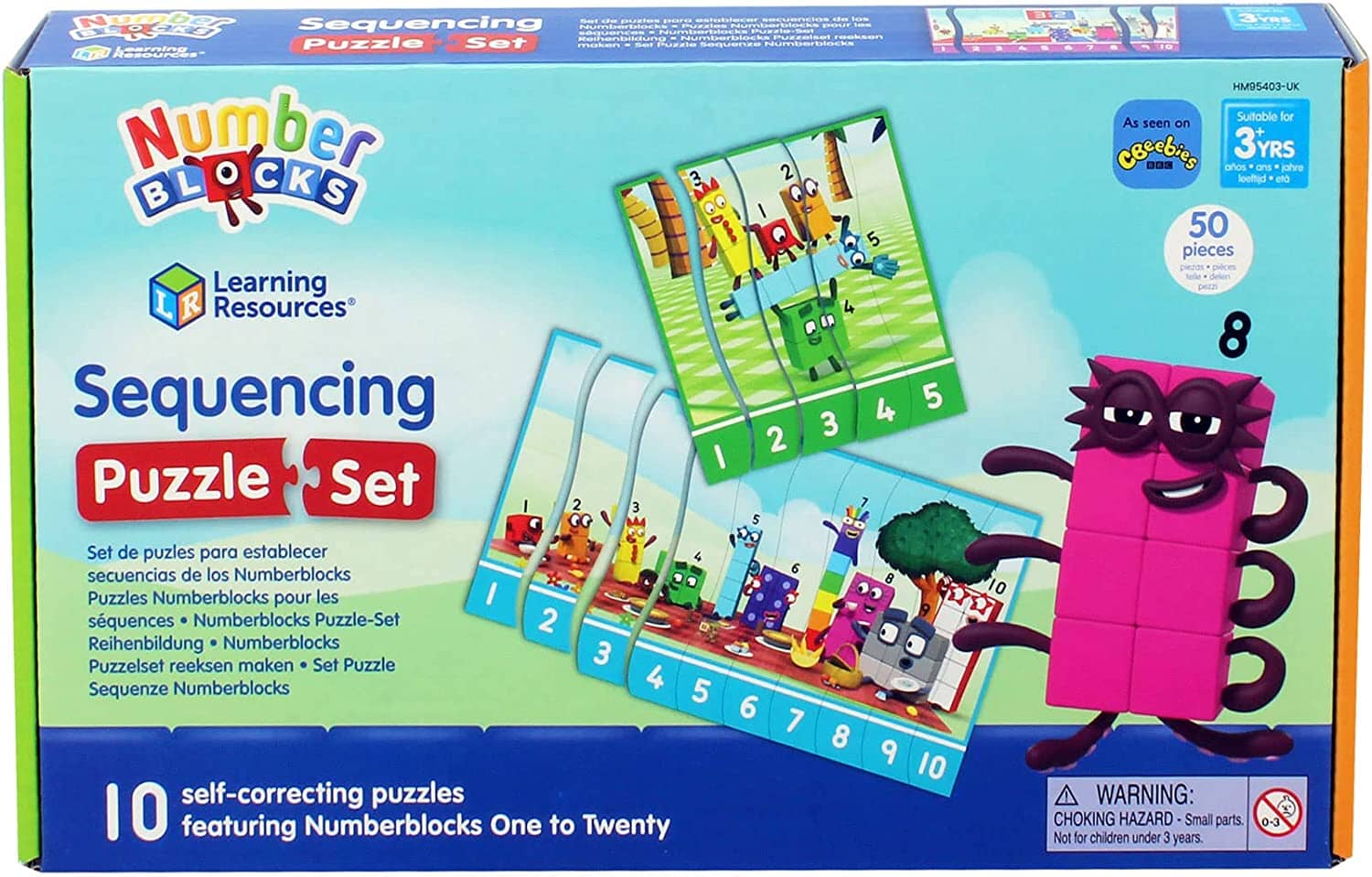
Numberblocks Sequencing Puzzle by Learning Resources - Ages 3 Years+ - Educational Toy Learning ResourcesNUMBERBLOCKS AS SEEN ON TV: Help children learn to sequence the numbers 1–20 in the correct order with their friends Numberblocks One to Twenty from the hit TV series. LEARN TO COUNT 1–20: Make learning to count 1–20 in the correct order fun for young children! As children complete the 20 colourful puzzles, they’ll be building basic maths skills along with colour recognition and fine motor skills. MATCH NUMBERS & PICTURES: Start with the 1-5 Numberblocks sequencing puzzles – can you put your friends One, Two, Three, Four, and Five in the correct order? As children learn and grow, progress to the next puzzle. PERFECT FOR LEARNING: Each of these Numberblocks maths puzzles is colour-coded for easy set-up. Each puzzle also has a number line, a teaching tool to help children sequence numbers and use to solve simple maths problems. INCLUDES: 10 double-sided puzzles - 4 each of puzzles for 1–5 (13cm L x 15cm W) and 1–10 (26cm L x 15cm W) and 2 for numbers 1–20 (51cm L x 15cm W).11,99 £*Shipping: 2,99 £Secure redirect to the provider
-
Motorola Programming Cable Motorola Programming CableStaying connected starts with gear you can trust. This 1 pc of Motorola CP200 programming cable makes it easier to program compatible radios quickly and confidently, whether you manage a fleet or maintain a few essential units. Designed for users...49,97 $*Shipping: 0,00 $Secure redirect to the provider
-
Microsoft SQL Server 2022 StandardMicrosoft SQL Server 2022 Standard Get unrivalled performance, security and flexibility with Microsoft SQL Server 2022 Standard. Designed to handle your critical business applications and complex workloads, SQL Server 2022 Standard offers a reliable and scalable data management platform. Main features: High Performance Optimises database performance with advanced analysis and query capabilities, ensuring fast response times for even the most demanding workloads. Advanced Security Protect your data with advanced security measures, including built-in encryption, strong authentication and granular access controls. High Availability and Disaster Recovery : Ensure business continuity with high availability solutions such as failover clustering, database mirroring and online backup. Facilitated Management and Monitoring It uses integrated tools for managing and monitoring database performance, simplifying maintenance and optimisation. Integration with Cloud Services Leverages the flexibility of the cloud with hybrid deployment options, allowing easy migration and scalability to the cloud. Support for Big Data : Easily integrate your relational data with unstructured data to obtain a complete and in-depth view of your business information. Compatibility and Flexibility It supports a wide range of programming languages, platforms and development tools, offering the flexibility to adapt to your company's specific needs. Microsoft SQL Server 2022 Standard is the ideal choice for companies needing a powerful, secure and versatile data management platform. Simplify your data management and improve operational efficiency with SQL Server 2022 Standard. How to download, install and activate SQL Server 2022 Standard: a step-by-step guide43,22 £*Shipping: 0,00 £Secure redirect to the provider
-
What are the differences between Sanger DNA sequencing and NGS sequencing using a sequencer?
Sanger DNA sequencing is a traditional method that involves sequencing one DNA fragment at a time using chain-terminating dideoxynucleotides. It is a slower and more labor-intensive process compared to NGS sequencing. NGS sequencing, on the other hand, uses massively parallel sequencing technology to simultaneously sequence millions of DNA fragments. This allows for high-throughput sequencing and the generation of large amounts of data in a shorter amount of time. Additionally, NGS sequencing can provide more comprehensive and detailed information about the entire genome, making it more suitable for large-scale genomic studies. **
-
What is the SQL query for the Terra database?
The SQL query for the Terra database will depend on the specific task or information you are trying to retrieve. However, a basic SQL query to retrieve all data from a table in the Terra database would look like this: ```sql SELECT * FROM table_name; ``` Replace "table_name" with the actual name of the table you want to retrieve data from. If you want to retrieve specific columns or apply filters, you can modify the query accordingly using the SELECT and WHERE clauses. **
-
What is the SQL query for a SQLite database?
The SQL query for a SQLite database is similar to other SQL databases. Here is an example of a simple SQL query for a SQLite database: ``` SELECT * FROM table_name; ``` This query selects all columns from the specified table in the database. Other common SQL queries for SQLite include INSERT, UPDATE, DELETE, and CREATE TABLE. **
-
What is the DNA sequencing for guanine?
The DNA sequencing for guanine is represented by the letter "G". Guanine is one of the four nucleobases found in DNA, along with adenine, cytosine, and thymine. It pairs with cytosine through three hydrogen bonds in the DNA double helix structure. The specific sequence of guanine, along with the other nucleobases, forms the genetic code that determines the characteristics and functions of an organism. **
Similar search terms for Sequencing
-
Microsoft Windows SQL Server 2019 StandardMicrosoft sql server 2019 - features and functionality SQL Server 2019 (15.x) represents an advancement over its previous versions, expanding the SQL Server platform with a wide range of choices across development languages, data types, on-premises or cloud environments and operating systems. It also introduces Big Data Clusters for SQL Server, offering additional features and enhancements for several components, including SQL Server Database Engine, SQL Server Analysis Services, SQL Server Machine Learning Services, SQL Server on Linux and SQL Server Master Data Services. Key features of Windows sql server 2019 include: SQL Server Database Engine: The Database Engine is the central service for storing, processing and securing data. It includes replication, full-text search, relational and XML data management tools, integration with analytical databases and PolyBase for accessing Hadoop and other heterogeneous data sources, as well as Machine Learning Services for running scripts in Python and R on relational data. Analysis Services: Analysis Services provides tools for creating and managing online analytical processing (OLAP) and data mining applications, supporting advanced analysis. Reporting Services: Reporting Services provides server and client components for developing, managing and distributing reports in various formats, including tabular, matrix, graphical and freeform. It is also an extensible platform that can be used for the development of reporting applications. Integration Services: Integration Services consists of a set of graphical tools and programmable objects for transferring, copying and transforming data. It also includes Data Quality Services (DQS) to improve data integrity. Master Data Services: Master Data Services (MDS) is SQL Server's solution for master data management, supporting various domains such as products, customers and accounts. It offers hierarchy management, granular security, transactions, data versioning and business rules, with an add-in for Excel for simplified data management. In-database Machine Learning Services: In-database Machine Learning Services allows distributed and scalable machine learning solutions to be implemented, leveraging corporate data. It supports R and Python, extending the capabilities introduced in SQL Server 2016. Machine Learning Server (Standalone): Machine Learning Server (standalone) facilitates the deployment of scalable machine learning solutions on different platforms, including Linux and Hadoop, supporting the R and Python languages as was already the case in SQL Server 2016. The SQL Server 2019 Standard edition provides basic data management and business intelligence database for departments and small organisations to run applications and supports common development tools for local and cloud environments, enabling effective database management with minimal IT resources. Comparison with other Windows Server versions: SQL Server Standard 2019 unlike other Windows Server...119,90 £*Shipping: 0,00 £Secure redirect to the provider
-
Microsoft Windows SQL Server 2022 StandardSQL Server 2022 (15.x) builds on previous releases to grow SQL Server as a platform that gives you choices of development languages, data types, on-premises or cloud environments, and operating systems. SQL Server 2022 features: SQL Server Database Engine. SQL Server Database Engine includes the Database Engine, the core service for storing, processing, and securing data, replication, full-text search, tools for managing relational and XML data, in database analytics integration, and PolyBase integration for access to heterogeneous data sources, and Machine Learning Services to run Python and R scripts with relational data. Analysis Services. Analysis Services includes the tools for creating and managing online analytical processing (OLAP) and data mining applications. Reporting Services. Reporting Services includes server and client components for creating, managing, and deploying tabular, matrix, graphical, and free-form reports. Reporting Services is also an extensible platform that you can use to develop report applications. Integration Services. Integration Services is a set of graphical tools and programmable objects for moving, copying, and transforming data. It also includes the Data Quality Services (DQS) component for Integration Services. Master Data Services. Master Data Services (MDS) is the SQL Server solution for master data management. MDS can be configured to manage any domain (products, customers, accounts) and includes hierarchies, granular security, transactions, data versioning, and business rules, as well as an Add-in for Excel that can be used to manage data. Machine Learning Services (In-Database). Machine Learning Services (In-Database) supports distributed, scalable machine learning solutions using enterprise data sources. In SQL Server 2016, the R language was supported. SQL Server 2022 (16.x) supports R and Python. Data Virtualization with PolyBase. Query different types of data on different types of data sources from SQL Server. Azure connected services. SQL Server 2022 (16.x) extends Azure connected services and features including Azure Synapse Link, Microsoft Purview access policies, Azure extension for SQL Server, pay-as-you-go billing, and the link feature for SQL Managed Instance. The following features were improved in SQL Server 2022: Analytics Availability Security Performance Query Store and intelligent query processing Management Platform Language SQL Server 2022 Standard edition delivers basic data management and business intelligence database for departments and small organizations to run their applications and supports common development tools for on-premises and cloud, enabling effective database management with minimal IT resources.644,90 £*Shipping: 0,00 £Secure redirect to the provider
-
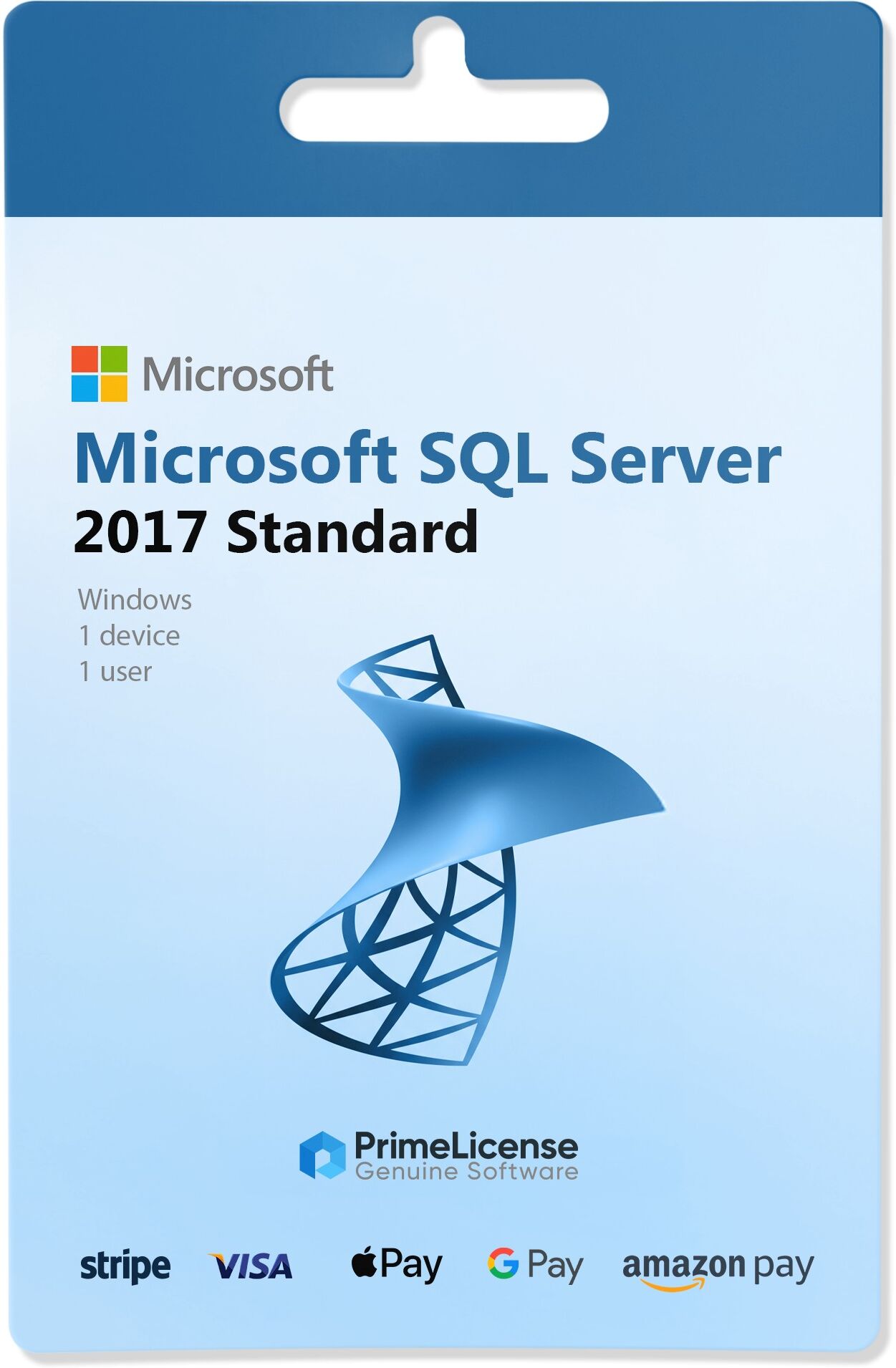
Microsoft Windows SQL Server 2017 StandardSQL Server 2017 (15.x) builds on previous releases to grow SQL Server as a platform that gives you choices of development languages, data types, on-premises or cloud environments, and operating systems. SQL Server 2017 (15.x) introduces Big Data Clusters for SQL Server. It also provides additional capability and improvements for the SQL Server database engine, SQL Server Analysis Services, SQL Server Machine Learning Services, SQL Server on Linux, and SQL Server Master Data Services. SQL Server 2017 features: SQL Server Database Engine. SQL Server Database Engine includes the Database Engine, the core service for storing, processing, and securing data, replication, full-text search, tools for managing relational and XML data, in database analytics integration, and PolyBase integration for access to Hadoop and other heterogeneous data sources, and Machine Learning Services to run Python and R scripts with relational data. Analysis Services. Analysis Services includes the tools for creating and managing online analytical processing (OLAP) and data mining applications. Reporting Services. Reporting Services includes server and client components for creating, managing, and deploying tabular, matrix, graphical, and free-form reports. Reporting Services is also an extensible platform that you can use to develop report applications. Integration Services. Integration Services is a set of graphical tools and programmable objects for moving, copying, and transforming data. It also includes the Data Quality Services (DQS) component for Integration Services. Master Data Services. Master Data Services (MDS) is the SQL Server solution for master data management. MDS can be configured to manage any domain (products, customers, accounts) and includes hierarchies, granular security, transactions, data versioning, and business rules, as well as an Add-in for Excel that can be used to manage data. Machine Learning Services (In-Database). Machine Learning Services (In-Database) supports distributed, scalable machine learning solutions using enterprise data sources. In SQL Server 2016, the R language was supported. SQL Server 2017 (15.x) supports R and Python. Machine Learning Server (Standalone). Machine Learning Server (Standalone) supports deployment of distributed, scalable machine learning solutions on multiple platforms and using multiple enterprise data sources, including Linux and Hadoop. In SQL Server 2016, the R language was supported. SQL Server 2017 (15.x) supports R and Python. SQL Server 2017 Standard edition delivers basic data management and business intelligence database for departments and small organizations to run their applications and supports common development tools for on-premises and cloud, enabling effective database management with minimal IT resources.85,90 £*Shipping: 0,00 £Secure redirect to the provider
-
Microsoft Windows SQL Server 2025 StandardMicrosoft SQL Server 2025 Standard is a professional-grade relational database platform designed for companies seeking a reliable, secure SQL engine ready for modern analytics and AI scenarios, without the complexity (and cost) of the Enterprise edition. General Description - SQL Server 2025 Standard offers a complete database engine for OLTP and mid-tier analytical workloads, ideal for ERP, CRM, web applications and business management. - It combines high performance, intuitive administration tools and native integration with the Microsoft ecosystem, including hybrid capabilities with Azure and Microsoft Fabric. Key features of the Standard edition - Advanced relational engine with support for transactions, indexes, views, stored procedures and functions, designed for business-critical loads of small and medium-sized enterprises. - Integrated reporting, analysis and management tools (e.g. SQL Server Management Studio, Query Store, monitoring and automatic tuning capabilities) to simplify day-to-day operations. New in 2025: AI and modern data - Native support for vector data and vector search, designed for artificial intelligence scenarios, RAGs and recommendation engines directly in the database. - Better handling of JSON and semi-structured data, with new types and indexes optimised for queries on JSON fields, as well as integrations with AI services and Azure OpenAI via T-SQL. Performance, scalability and availability - Engine optimisations (improved locking, enhanced Intelligent Query Processing, OPPO, optimisations for sp_executesql) for increased stability in high concurrency environments. - Enhanced Standard Edition with support for up to 32 cores and 256 GB RAM, ideal for mid-range physical or virtualised servers, with Basic Availability Groups for simple high availability. Security and Cloud Integration - Zero Trust aligned security, Microsoft Entra ID integration, advanced encryption, auditing and centralised policy management via Azure Arc. - Support for on-premises, hybrid and cloud scenarios, with direct connections to Azure, integration with Microsoft Fabric and event streaming tools for real-time data.816,90 £*Shipping: 0,00 £Secure redirect to the provider
-
Why are modern DNA sequencing methods faster?
Modern DNA sequencing methods are faster due to advancements in technology and automation. High-throughput sequencing machines can process multiple samples simultaneously, increasing the speed of data generation. Additionally, improvements in chemistry and bioinformatics have streamlined the sequencing process, reducing the time and resources required for analysis. These advancements have made it possible to sequence large genomes in a fraction of the time it would have taken with older methods, revolutionizing the field of genomics. **
-
What is database normalization?
Database normalization is the process of organizing data in a database in a way that reduces redundancy and dependency. It involves breaking down a database into smaller, more manageable tables and defining relationships between them. The goal of normalization is to minimize data redundancy, improve data integrity, and make the database more efficient. There are different levels of normalization, known as normal forms, with each level addressing specific issues related to data organization. **
-
What is the difference between sequencing and transposition?
Sequencing is the process of determining the precise order of nucleotides in a DNA or RNA molecule. It involves identifying the sequence of bases (A, T, C, G) in a specific region of genetic material. Transposition, on the other hand, is a genetic process where a segment of DNA moves from one location in the genome to another. This can result in genetic mutations or changes in the expression of certain genes. In summary, sequencing involves determining the order of nucleotides, while transposition involves the movement of genetic material within the genome. **
-
What is the difference between these two sequencing methods?
The difference between Sanger sequencing and next-generation sequencing (NGS) lies in their technology and throughput. Sanger sequencing, also known as first-generation sequencing, is a traditional method that uses chain-terminating dideoxynucleotides to sequence DNA. It is a slower and more labor-intensive process, typically used for sequencing shorter DNA fragments. On the other hand, NGS is a high-throughput method that sequences millions of DNA fragments in parallel, allowing for faster and more cost-effective sequencing of entire genomes or targeted regions. NGS also provides greater depth of coverage and can detect rare genetic variants more effectively than Sanger sequencing. **
* All prices are inclusive of VAT and, if applicable, plus shipping costs. The offer information is based on the details provided by the respective shop and is updated through automated processes. Real-time updates do not occur, so deviations can occur in individual cases. ** Note: Parts of this content were created by AI.