Buy celko.eu ?
We are moving the project
celko.eu .
Are you interested in purchasing the domain
celko.eu ?
domain@kv-gmbh.de · 0541-91531010
Buy celko.eu ?
Is the voltage regulator AVR broken?
To determine if the voltage regulator AVR is broken, you can perform a few diagnostic tests. First, check the output voltage of the AVR using a multimeter to see if it is within the specified range. If the output voltage is significantly higher or lower than the specified range, it could indicate a problem with the AVR. Additionally, you can inspect the AVR for any physical damage or signs of overheating. If you notice any burnt components or visible damage, it may indicate that the AVR is indeed broken and in need of repair or replacement. **
Which voltage regulator do you mean?
I apologize for any confusion. I was referring to the LM7805 voltage regulator, which is a commonly used linear voltage regulator that provides a stable 5V output from a higher input voltage. It is widely used in electronic circuits to power microcontrollers, sensors, and other low-power devices. If you were referring to a different voltage regulator, please provide more details so I can better assist you. **

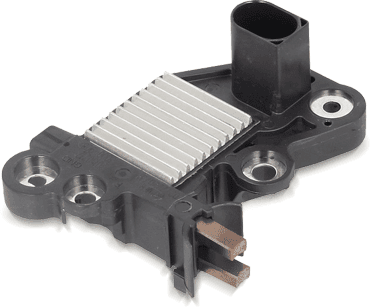
Similar search terms for Onan-Voltage-Regulator-Rectifier
Top-Angebote
Products related to Onan-Voltage-Regulator-Rectifier:
-
TOPRAN 100 134 Alternator voltage regulatorRated Voltage [V]: 14,5; old version: ; Manufacturer Restriction: Bosch; Alternator Charging Current [A]: 70, 120, 100, 150; Vehicle Equipment: for vehicles with power steering; Vehicle Identification Number (VIN) from: P1000001, P5000001, P7500001, 4A-P-160001, 4A-N-060001, 31-N-160001, 31-P-200001, 70-S-071872, P9000001, P2500001, P3000001, P4000001, P8000001, S4000001, 70-P-060001, 1L-ZD304851, S3000001, S6000001; TecDoc Engine Number: 4813, 4963, 4975, 6554, 5080, 4288, 4846, 2864, 2863, 4841, 2852, 2866, 3574, 48166, 4269, 15335, 13950, 13949, 13929, 4199, 5046, 4984, 4988, 13932, 13931, 13930, 9516, 4197, 17623, 17637, 6587, 2880, 14729, 5396, 5536, 14731, 16257, 16256, 5558, 16259, 15808, 5560, 4978, 8507, 17593, 11497, 5557, 21179, 33011, 16385, 15486, 9456, 14730, 17581, 17584, 15128, 21039, 12808, 10727, 16193, 17573, 12829, 2834; not for alternator charging current [A]: 120, 150; Construction Year from: 08/1992, 10/1993; Construction Year to: 07/1992, 12/1998, 04/1998; Vehicle Identification Number (VIN) to: 3A-S-110000, 70-X-075000, Y1999999, 7M-X-055000, 17066218, W5999999, 11137968, 70-1-200000, 8L-W-095000, 7M-X-517024, 3B-X-150000, 4A-S-020156, 4B-W-220000, 6H-X-140000, 1U-W-113660, 2D-X-009000, 6H-X-046000, 1C-W-024255, Y2999999, Y5999999, Y6999999, Y8999999, YH999999; Alternator Number: 0 120 335 007, 0 120 335 012; Vehicle type: TU3MC / KDX; not for country specific design: South Africa; Alternator Charging Current from [A]: 55; Alternator Charging Current to [A]: 707,29 £*Shipping: 8,45 £Secure redirect to the provider
-
TOPRAN 100 343 Alternator voltage regulatorManufacturer Restriction: Bosch; Rated Voltage [V]: 14,6; new version: ; Vehicle Identification Number (VIN) from: 4A-P-160001, 4A-N-060001, 31-N-160001, 31-P-200001, 70-S-071872, 70-P-060001, 1L-ZD304851; Alternator Charging Current [A]: 120, 150; not for alternator charging current [A]: 120, 150; Construction Year from: 08/1992, 10/1993; TecDoc Engine Number: 4963, 4975, 3574, 15335, 13950, 13949, 13929, 4199, 4984, 4988, 13932, 13931, 13930, 4197, 9516, 5536, 16257, 16256, 5558, 16259, 15808, 5560, 4978, 11497, 5557, 16385, 15486, 9456, 15128; Construction Year to: 07/1992, 12/1998, 04/1998; Vehicle Identification Number (VIN) to: 3A-S-110000, 70-X-075000, 7M-X-055000, 8L-W-095000, 7M-X-517024, 3B-X-150000, 4A-S-020156, 4B-W-220000, 6H-X-140000, 1U-W-113660, 70-1-200000, 2D-X-009000, 6H-X-046000, 1C-W-0242557,29 £*Shipping: 8,45 £Secure redirect to the provider
-
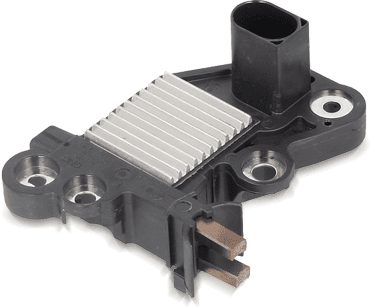
AS-PL ARE0006S Alternator voltage regulatorVoltage [V]: 12; Plug Type ID: PL_n/a; Quality: STANDARD LINE; New part without deposit: ; Manufacturer Restriction: BOSCH; Engine Code: LFZ<XU7JP KAT.>; Construction Year from: 05/1997, 03/1997; Construction Year to: 08/19985,99 £*Shipping: 8,45 £Secure redirect to the provider


-
How does a rectifier increase the voltage?
A rectifier increases the voltage by converting alternating current (AC) to direct current (DC). This process involves using diodes to allow current flow in only one direction, effectively eliminating the negative portion of the AC waveform. As a result, the output voltage is higher than the peak voltage of the AC input signal, leading to an increase in voltage. **
-
How does an LM317 voltage regulator work?
The LM317 voltage regulator works by taking an input voltage and regulating it to a specific output voltage. It achieves this by using a reference voltage and a feedback loop to adjust the output voltage as needed. The reference voltage is compared to a fraction of the output voltage, and the regulator adjusts the output voltage by controlling the current flowing through a pass transistor. This allows the LM317 to maintain a stable output voltage, even when the input voltage or load conditions change. Overall, the LM317 voltage regulator provides a simple and effective way to regulate voltage in electronic circuits. **
-
What is the output voltage of a bridge rectifier?
The output voltage of a bridge rectifier is the peak voltage of the input AC signal minus the voltage drop across the diodes. This means that the output voltage will be slightly less than the peak voltage of the input signal. The output voltage is typically around 0.7 volts lower than the peak voltage for each diode in the bridge rectifier circuit. **
-
How do you calculate the voltage behind a rectifier?
To calculate the voltage behind a rectifier, you need to consider the input voltage, the type of rectifier used (half-wave or full-wave), and the load connected to the rectifier. For a half-wave rectifier, the output voltage will be approximately half of the peak input voltage. For a full-wave rectifier, the output voltage will be closer to the peak input voltage. Additionally, you need to account for the voltage drop across the diodes in the rectifier circuit. By understanding these factors and using the appropriate formulas, you can calculate the voltage behind a rectifier. **


How do you calculate the voltage across a rectifier?
To calculate the voltage across a rectifier, you need to consider the input voltage and the forward voltage drop across the diode. The voltage across the rectifier can be calculated by subtracting the forward voltage drop of the diode from the input voltage. This can be expressed as Vout = Vin - Vf, where Vout is the output voltage, Vin is the input voltage, and Vf is the forward voltage drop across the diode. By knowing these values, you can determine the voltage across the rectifier in a circuit. **
Does a motherboard necessarily require a cooled voltage regulator?
Yes, a motherboard typically requires a cooled voltage regulator to ensure stable power delivery to the components. The voltage regulator helps regulate the voltage supplied to the CPU and other components, preventing overheating and potential damage. Cooling the voltage regulator is essential to maintain its efficiency and prevent it from overheating during heavy usage, ultimately ensuring the overall stability and longevity of the motherboard. **
Top-Angebote
Products related to Onan-Voltage-Regulator-Rectifier:
-
AUTOMEGA 150014810 Alternator voltage regulatorVoltage [V]: 14,7; Manufacturer Restriction: BOSCH; for OE number: 90349907, 1204259; TecDoc Engine Number: 4812, 4759, 4791, 4793, 4810, 4755, 4782, 4785, 4799, 4780, 4735, 4749, 16169; Vehicle Identification Number (VIN) to: S2500015, P4999999, R8999999, R5999999, R4999999, S6000012, R39999995,99 £*Shipping: 8,45 £Secure redirect to the provider
-
TOPRAN 100 134 Alternator voltage regulatorRated Voltage [V]: 14,5; old version: ; Manufacturer Restriction: Bosch; Alternator Charging Current [A]: 70, 120, 100, 150; Vehicle Equipment: for vehicles with power steering; Vehicle Identification Number (VIN) from: P1000001, P5000001, P7500001, 4A-P-160001, 4A-N-060001, 31-N-160001, 31-P-200001, 70-S-071872, P9000001, P2500001, P3000001, P4000001, P8000001, S4000001, 70-P-060001, 1L-ZD304851, S3000001, S6000001; TecDoc Engine Number: 4813, 4963, 4975, 6554, 5080, 4288, 4846, 2864, 2863, 4841, 2852, 2866, 3574, 48166, 4269, 15335, 13950, 13949, 13929, 4199, 5046, 4984, 4988, 13932, 13931, 13930, 9516, 4197, 17623, 17637, 6587, 2880, 14729, 5396, 5536, 14731, 16257, 16256, 5558, 16259, 15808, 5560, 4978, 8507, 17593, 11497, 5557, 21179, 33011, 16385, 15486, 9456, 14730, 17581, 17584, 15128, 21039, 12808, 10727, 16193, 17573, 12829, 2834; not for alternator charging current [A]: 120, 150; Construction Year from: 08/1992, 10/1993; Construction Year to: 07/1992, 12/1998, 04/1998; Vehicle Identification Number (VIN) to: 3A-S-110000, 70-X-075000, Y1999999, 7M-X-055000, 17066218, W5999999, 11137968, 70-1-200000, 8L-W-095000, 7M-X-517024, 3B-X-150000, 4A-S-020156, 4B-W-220000, 6H-X-140000, 1U-W-113660, 2D-X-009000, 6H-X-046000, 1C-W-024255, Y2999999, Y5999999, Y6999999, Y8999999, YH999999; Alternator Number: 0 120 335 007, 0 120 335 012; Vehicle type: TU3MC / KDX; not for country specific design: South Africa; Alternator Charging Current from [A]: 55; Alternator Charging Current to [A]: 707,29 £*Shipping: 8,45 £Secure redirect to the provider
-
Is the voltage regulator AVR broken?
To determine if the voltage regulator AVR is broken, you can perform a few diagnostic tests. First, check the output voltage of the AVR using a multimeter to see if it is within the specified range. If the output voltage is significantly higher or lower than the specified range, it could indicate a problem with the AVR. Additionally, you can inspect the AVR for any physical damage or signs of overheating. If you notice any burnt components or visible damage, it may indicate that the AVR is indeed broken and in need of repair or replacement. **
-
Which voltage regulator do you mean?
I apologize for any confusion. I was referring to the LM7805 voltage regulator, which is a commonly used linear voltage regulator that provides a stable 5V output from a higher input voltage. It is widely used in electronic circuits to power microcontrollers, sensors, and other low-power devices. If you were referring to a different voltage regulator, please provide more details so I can better assist you. **
-
How does a rectifier increase the voltage?
A rectifier increases the voltage by converting alternating current (AC) to direct current (DC). This process involves using diodes to allow current flow in only one direction, effectively eliminating the negative portion of the AC waveform. As a result, the output voltage is higher than the peak voltage of the AC input signal, leading to an increase in voltage. **
-
How does an LM317 voltage regulator work?
The LM317 voltage regulator works by taking an input voltage and regulating it to a specific output voltage. It achieves this by using a reference voltage and a feedback loop to adjust the output voltage as needed. The reference voltage is compared to a fraction of the output voltage, and the regulator adjusts the output voltage by controlling the current flowing through a pass transistor. This allows the LM317 to maintain a stable output voltage, even when the input voltage or load conditions change. Overall, the LM317 voltage regulator provides a simple and effective way to regulate voltage in electronic circuits. **
Similar search terms for Onan-Voltage-Regulator-Rectifier
-
TOPRAN 100 343 Alternator voltage regulatorManufacturer Restriction: Bosch; Rated Voltage [V]: 14,6; new version: ; Vehicle Identification Number (VIN) from: 4A-P-160001, 4A-N-060001, 31-N-160001, 31-P-200001, 70-S-071872, 70-P-060001, 1L-ZD304851; Alternator Charging Current [A]: 120, 150; not for alternator charging current [A]: 120, 150; Construction Year from: 08/1992, 10/1993; TecDoc Engine Number: 4963, 4975, 3574, 15335, 13950, 13949, 13929, 4199, 4984, 4988, 13932, 13931, 13930, 4197, 9516, 5536, 16257, 16256, 5558, 16259, 15808, 5560, 4978, 11497, 5557, 16385, 15486, 9456, 15128; Construction Year to: 07/1992, 12/1998, 04/1998; Vehicle Identification Number (VIN) to: 3A-S-110000, 70-X-075000, 7M-X-055000, 8L-W-095000, 7M-X-517024, 3B-X-150000, 4A-S-020156, 4B-W-220000, 6H-X-140000, 1U-W-113660, 70-1-200000, 2D-X-009000, 6H-X-046000, 1C-W-0242557,29 £*Shipping: 8,45 £Secure redirect to the provider
-
AS-PL ARE0006S Alternator voltage regulatorVoltage [V]: 12; Plug Type ID: PL_n/a; Quality: STANDARD LINE; New part without deposit: ; Manufacturer Restriction: BOSCH; Engine Code: LFZ<XU7JP KAT.>; Construction Year from: 05/1997, 03/1997; Construction Year to: 08/19985,99 £*Shipping: 8,45 £Secure redirect to the provider
-
MAXGEAR 10-0021 Alternator voltage regulatorVoltage [V]: 14,5, 14,1; Weight [kg]: 0,05; TecDoc Engine Number: 11087, 12073, 1296, 15932, 16428, 21343, 224, 253, 267, 2777, 278, 279, 2960, 2965, 2967, 304, 345, 348, 3574, 4002, 4013, 4015, 4062, 4063, 4068, 4070, 4093, 4109, 4118, 4131, 4136, 4140, 4151, 4495, 4496, 4836, 4897, 4963, 4971, 4975, 4978, 4992, 5011, 5013, 5027, 5158, 5532, 5536, 8507, 9347, 9375; Construction Year from: 02/1987, 04/1982, 08/1988; Construction Year to: 01/1987, 04/1993, 07/1981, 10/2001; Vehicle Identification Number (VIN) from: 18-B-001251; for OE number: 0120488129, 0120489259, 0120489394, 9120144255; Alternator Charging Current [A]: 90; Manufacturer Restriction: Bosch; Vehicle Equipment: for vehicles without air conditioning; Manufacturer restriction alternator: Bosch6,29 £*Shipping: 8,45 £Secure redirect to the provider
-
What is the output voltage of a bridge rectifier?
The output voltage of a bridge rectifier is the peak voltage of the input AC signal minus the voltage drop across the diodes. This means that the output voltage will be slightly less than the peak voltage of the input signal. The output voltage is typically around 0.7 volts lower than the peak voltage for each diode in the bridge rectifier circuit. **
-
How do you calculate the voltage behind a rectifier?
To calculate the voltage behind a rectifier, you need to consider the input voltage, the type of rectifier used (half-wave or full-wave), and the load connected to the rectifier. For a half-wave rectifier, the output voltage will be approximately half of the peak input voltage. For a full-wave rectifier, the output voltage will be closer to the peak input voltage. Additionally, you need to account for the voltage drop across the diodes in the rectifier circuit. By understanding these factors and using the appropriate formulas, you can calculate the voltage behind a rectifier. **
-
How do you calculate the voltage across a rectifier?
To calculate the voltage across a rectifier, you need to consider the input voltage and the forward voltage drop across the diode. The voltage across the rectifier can be calculated by subtracting the forward voltage drop of the diode from the input voltage. This can be expressed as Vout = Vin - Vf, where Vout is the output voltage, Vin is the input voltage, and Vf is the forward voltage drop across the diode. By knowing these values, you can determine the voltage across the rectifier in a circuit. **
-
Does a motherboard necessarily require a cooled voltage regulator?
Yes, a motherboard typically requires a cooled voltage regulator to ensure stable power delivery to the components. The voltage regulator helps regulate the voltage supplied to the CPU and other components, preventing overheating and potential damage. Cooling the voltage regulator is essential to maintain its efficiency and prevent it from overheating during heavy usage, ultimately ensuring the overall stability and longevity of the motherboard. **
* All prices are inclusive of VAT and, if applicable, plus shipping costs. The offer information is based on the details provided by the respective shop and is updated through automated processes. Real-time updates do not occur, so deviations can occur in individual cases. ** Note: Parts of this content were created by AI.