Buy celko.eu ?
We are moving the project
celko.eu .
Are you interested in purchasing the domain
celko.eu ?
domain@kv-gmbh.de · 0541-91531010
Buy celko.eu ?
What is the SQL query for the Terra database?
The SQL query for the Terra database will depend on the specific task or information you are trying to retrieve. However, a basic SQL query to retrieve all data from a table in the Terra database would look like this: ```sql SELECT * FROM table_name; ``` Replace "table_name" with the actual name of the table you want to retrieve data from. If you want to retrieve specific columns or apply filters, you can modify the query accordingly using the SELECT and WHERE clauses. **
What is the SQL query for a SQLite database?
The SQL query for a SQLite database is similar to other SQL databases. Here is an example of a simple SQL query for a SQLite database: ``` SELECT * FROM table_name; ``` This query selects all columns from the specified table in the database. Other common SQL queries for SQLite include INSERT, UPDATE, DELETE, and CREATE TABLE. **

Similar search terms for DM
Top-Angebote
Products related to DM:
-
Sigma DM-4 'Marquis' Natural Gloss 1989 Dreadnought Acoustic Guitar Natural Gloss - RefurbishedThis is a Sigma DM-4 'Marquis' Dreadnought Acoustic Guitar in Natural Gloss finish. Made in Korea in 1989, this guitar consists of a Laminated Spruce top, Laminated Mahogany back and sides, and a 20-fret Rosewood fingerboard. Other appointments include Sealed Die-Cast tuners, a Rosewood bridge, and dot inlays with two additional teardrop inlays on the 12th fret. The gloss-finished Mahogany neck sits comfortably in the hand, with C-shape profile providing ergonomic thumb positioning in all registers allowing for easy navigation up and down the neck. The Rosewood fretboard feels pleasant under the fingers and provides a smooth surface for the user to explore, along with the 16” radius making bending and vibrato techniques a breeze. The dreadnought design fills the arms, providing a dynamic and responsive playing experience, making the user feel the resonance that this guitar produces. This guitar has a well-balanced and dynamic tone, producing a warm and rich sound, with a strong and clear midrange. The Laminated Spruce top and bracing contribute to the guitar's excellent projection and sustain, producing a bright and crisp high end that is well-articulated, whilst the Laminated Mahogany back and sides offer a warm and deep low end that make chords hum and chime.470,00 £*Shipping: 0,00 £Secure redirect to the provider
-
YODN 380W 18R Moving Head Light Discharge Lamp for the DMON DM-D380 FixtureNew YODN 380W 18R Moving Head Beam Beam Lamp Replacement (Bare Bulb). This reliable long life short arc lamp is perfect for moving head fixtures used in houses of worship, clubs, concerts, stage, theater, and more! The YODN R Series Beam lamps offer...104,99 $*Shipping: 0,00 $Secure redirect to the provider
-
United Charger & Smartwatch Data Cable Replacement Charger & Smartwatch Data Cable ReplacementKeep your Garmin 920XT charger ready whenever adventure calls. Designed for athletes, runners, and fitness enthusiasts, this replacement charger ensures your Forerunner 920XT stays powered and connected. Its durable smartwatch charging cable offers...39,97 $*Shipping: 0,00 $Secure redirect to the provider
-
Microsoft Windows SQL Server 2025 StandardMicrosoft SQL Server 2025 Standard is a professional-grade relational database platform designed for companies seeking a reliable, secure SQL engine ready for modern analytics and AI scenarios, without the complexity (and cost) of the Enterprise edition. General Description - SQL Server 2025 Standard offers a complete database engine for OLTP and mid-tier analytical workloads, ideal for ERP, CRM, web applications and business management. - It combines high performance, intuitive administration tools and native integration with the Microsoft ecosystem, including hybrid capabilities with Azure and Microsoft Fabric. Key features of the Standard edition - Advanced relational engine with support for transactions, indexes, views, stored procedures and functions, designed for business-critical loads of small and medium-sized enterprises. - Integrated reporting, analysis and management tools (e.g. SQL Server Management Studio, Query Store, monitoring and automatic tuning capabilities) to simplify day-to-day operations. New in 2025: AI and modern data - Native support for vector data and vector search, designed for artificial intelligence scenarios, RAGs and recommendation engines directly in the database. - Better handling of JSON and semi-structured data, with new types and indexes optimised for queries on JSON fields, as well as integrations with AI services and Azure OpenAI via T-SQL. Performance, scalability and availability - Engine optimisations (improved locking, enhanced Intelligent Query Processing, OPPO, optimisations for sp_executesql) for increased stability in high concurrency environments. - Enhanced Standard Edition with support for up to 32 cores and 256 GB RAM, ideal for mid-range physical or virtualised servers, with Basic Availability Groups for simple high availability. Security and Cloud Integration - Zero Trust aligned security, Microsoft Entra ID integration, advanced encryption, auditing and centralised policy management via Azure Arc. - Support for on-premises, hybrid and cloud scenarios, with direct connections to Azure, integration with Microsoft Fabric and event streaming tools for real-time data.816,90 £*Shipping: 0,00 £Secure redirect to the provider


-
What is database normalization?
Database normalization is the process of organizing data in a database in a way that reduces redundancy and dependency. It involves breaking down a database into smaller, more manageable tables and defining relationships between them. The goal of normalization is to minimize data redundancy, improve data integrity, and make the database more efficient. There are different levels of normalization, known as normal forms, with each level addressing specific issues related to data organization. **
-
How do I insert data into a SQL database?
To insert data into a SQL database, you can use the SQL INSERT INTO statement. The basic syntax is: INSERT INTO table_name (column1, column2, column3, ...) VALUES (value1, value2, value3, ...); You need to specify the table name and the columns you want to insert data into, followed by the values you want to insert into those columns. Make sure the data types of the values match the data types of the columns in the table. Finally, execute the SQL query to insert the data into the database. **
-
What is the normalization of database anomalies?
Normalization of database anomalies is the process of organizing data in a database in such a way that it reduces redundancy and dependency. This helps in improving data integrity and consistency by minimizing the chances of anomalies such as insertion, update, and deletion anomalies. By breaking down data into smaller, manageable tables and establishing relationships between them, normalization ensures that data is stored efficiently and accurately. Overall, normalization helps in maintaining data quality and making the database more robust and reliable. **
-
What is the normalization of a database?
Normalization is the process of organizing data in a database to reduce redundancy and dependency. It involves breaking down a database into smaller, more manageable tables and establishing relationships between them. The goal of normalization is to minimize data duplication and ensure data integrity, making it easier to update and maintain the database. This process typically involves creating primary and foreign keys to link related tables and removing any repeating groups of data. **
What is SQL query 2?
SQL query 2 is a structured query language statement used to retrieve data from a database. It typically includes keywords such as SELECT, FROM, WHERE, and ORDER BY to specify the data to be retrieved, the table from which to retrieve it, any conditions that must be met, and the order in which the data should be presented. SQL query 2 can be customized to filter, sort, and manipulate data according to specific requirements. **
How can I query data from a MySQL database using Java?
To query data from a MySQL database using Java, you can use the JDBC (Java Database Connectivity) API. First, you need to establish a connection to the MySQL database using the DriverManager class and provide the database URL, username, and password. Then, you can create a Statement or PreparedStatement object to execute SQL queries such as SELECT statements to retrieve data from the database. After executing the query, you can process the ResultSet object to retrieve the data returned by the query. Finally, remember to close the connection and resources after you are done querying the database. **
Top-Angebote
Products related to DM:
-
Inspire Picks Bonus Mom Acrylic Decorative Plaque Gift dm 242A bonus mom holds a special place that deserves to be celebrated. This elegant bonus mom gift acrylic plaque is designed to express love, gratitude, and appreciation in a simple yet meaningful way. Perfect for Mothers Day, birthdays, or Christmas,...34,93 $*Shipping: 0,00 $Secure redirect to the provider
-
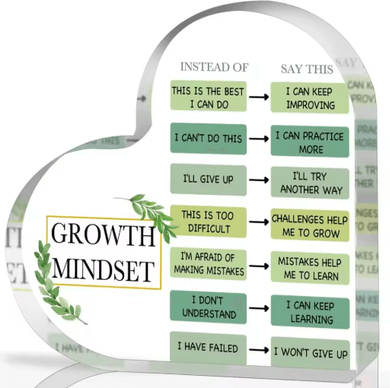
Inspire Picks Inspirational Growth Mindset Wall Decor Acrylic Affirmation Display dm 872Transform your space into a source of daily inspiration with this meaningful dcor piece. Designed to encourage positivity and selfgrowth, this inspirational acrylic decor features powerful affirmations that uplift and motivate. Perfect for homes,...34,93 $*Shipping: 0,00 $Secure redirect to the provider
-
Sigma DM-4 'Marquis' Natural Gloss 1989 Dreadnought Acoustic Guitar Natural Gloss - RefurbishedThis is a Sigma DM-4 'Marquis' Dreadnought Acoustic Guitar in Natural Gloss finish. Made in Korea in 1989, this guitar consists of a Laminated Spruce top, Laminated Mahogany back and sides, and a 20-fret Rosewood fingerboard. Other appointments include Sealed Die-Cast tuners, a Rosewood bridge, and dot inlays with two additional teardrop inlays on the 12th fret. The gloss-finished Mahogany neck sits comfortably in the hand, with C-shape profile providing ergonomic thumb positioning in all registers allowing for easy navigation up and down the neck. The Rosewood fretboard feels pleasant under the fingers and provides a smooth surface for the user to explore, along with the 16” radius making bending and vibrato techniques a breeze. The dreadnought design fills the arms, providing a dynamic and responsive playing experience, making the user feel the resonance that this guitar produces. This guitar has a well-balanced and dynamic tone, producing a warm and rich sound, with a strong and clear midrange. The Laminated Spruce top and bracing contribute to the guitar's excellent projection and sustain, producing a bright and crisp high end that is well-articulated, whilst the Laminated Mahogany back and sides offer a warm and deep low end that make chords hum and chime.470,00 £*Shipping: 0,00 £Secure redirect to the provider
-
YODN 380W 18R Moving Head Light Discharge Lamp for the DMON DM-D380 FixtureNew YODN 380W 18R Moving Head Beam Beam Lamp Replacement (Bare Bulb). This reliable long life short arc lamp is perfect for moving head fixtures used in houses of worship, clubs, concerts, stage, theater, and more! The YODN R Series Beam lamps offer...104,99 $*Shipping: 0,00 $Secure redirect to the provider
-
What is the SQL query for the Terra database?
The SQL query for the Terra database will depend on the specific task or information you are trying to retrieve. However, a basic SQL query to retrieve all data from a table in the Terra database would look like this: ```sql SELECT * FROM table_name; ``` Replace "table_name" with the actual name of the table you want to retrieve data from. If you want to retrieve specific columns or apply filters, you can modify the query accordingly using the SELECT and WHERE clauses. **
-
What is the SQL query for a SQLite database?
The SQL query for a SQLite database is similar to other SQL databases. Here is an example of a simple SQL query for a SQLite database: ``` SELECT * FROM table_name; ``` This query selects all columns from the specified table in the database. Other common SQL queries for SQLite include INSERT, UPDATE, DELETE, and CREATE TABLE. **
-
What is database normalization?
Database normalization is the process of organizing data in a database in a way that reduces redundancy and dependency. It involves breaking down a database into smaller, more manageable tables and defining relationships between them. The goal of normalization is to minimize data redundancy, improve data integrity, and make the database more efficient. There are different levels of normalization, known as normal forms, with each level addressing specific issues related to data organization. **
-
How do I insert data into a SQL database?
To insert data into a SQL database, you can use the SQL INSERT INTO statement. The basic syntax is: INSERT INTO table_name (column1, column2, column3, ...) VALUES (value1, value2, value3, ...); You need to specify the table name and the columns you want to insert data into, followed by the values you want to insert into those columns. Make sure the data types of the values match the data types of the columns in the table. Finally, execute the SQL query to insert the data into the database. **
Similar search terms for DM
-
United Charger & Smartwatch Data Cable Replacement Charger & Smartwatch Data Cable ReplacementKeep your Garmin 920XT charger ready whenever adventure calls. Designed for athletes, runners, and fitness enthusiasts, this replacement charger ensures your Forerunner 920XT stays powered and connected. Its durable smartwatch charging cable offers...39,97 $*Shipping: 0,00 $Secure redirect to the provider
-
Microsoft Windows SQL Server 2025 StandardMicrosoft SQL Server 2025 Standard is a professional-grade relational database platform designed for companies seeking a reliable, secure SQL engine ready for modern analytics and AI scenarios, without the complexity (and cost) of the Enterprise edition. General Description - SQL Server 2025 Standard offers a complete database engine for OLTP and mid-tier analytical workloads, ideal for ERP, CRM, web applications and business management. - It combines high performance, intuitive administration tools and native integration with the Microsoft ecosystem, including hybrid capabilities with Azure and Microsoft Fabric. Key features of the Standard edition - Advanced relational engine with support for transactions, indexes, views, stored procedures and functions, designed for business-critical loads of small and medium-sized enterprises. - Integrated reporting, analysis and management tools (e.g. SQL Server Management Studio, Query Store, monitoring and automatic tuning capabilities) to simplify day-to-day operations. New in 2025: AI and modern data - Native support for vector data and vector search, designed for artificial intelligence scenarios, RAGs and recommendation engines directly in the database. - Better handling of JSON and semi-structured data, with new types and indexes optimised for queries on JSON fields, as well as integrations with AI services and Azure OpenAI via T-SQL. Performance, scalability and availability - Engine optimisations (improved locking, enhanced Intelligent Query Processing, OPPO, optimisations for sp_executesql) for increased stability in high concurrency environments. - Enhanced Standard Edition with support for up to 32 cores and 256 GB RAM, ideal for mid-range physical or virtualised servers, with Basic Availability Groups for simple high availability. Security and Cloud Integration - Zero Trust aligned security, Microsoft Entra ID integration, advanced encryption, auditing and centralised policy management via Azure Arc. - Support for on-premises, hybrid and cloud scenarios, with direct connections to Azure, integration with Microsoft Fabric and event streaming tools for real-time data.816,90 £*Shipping: 0,00 £Secure redirect to the provider
-
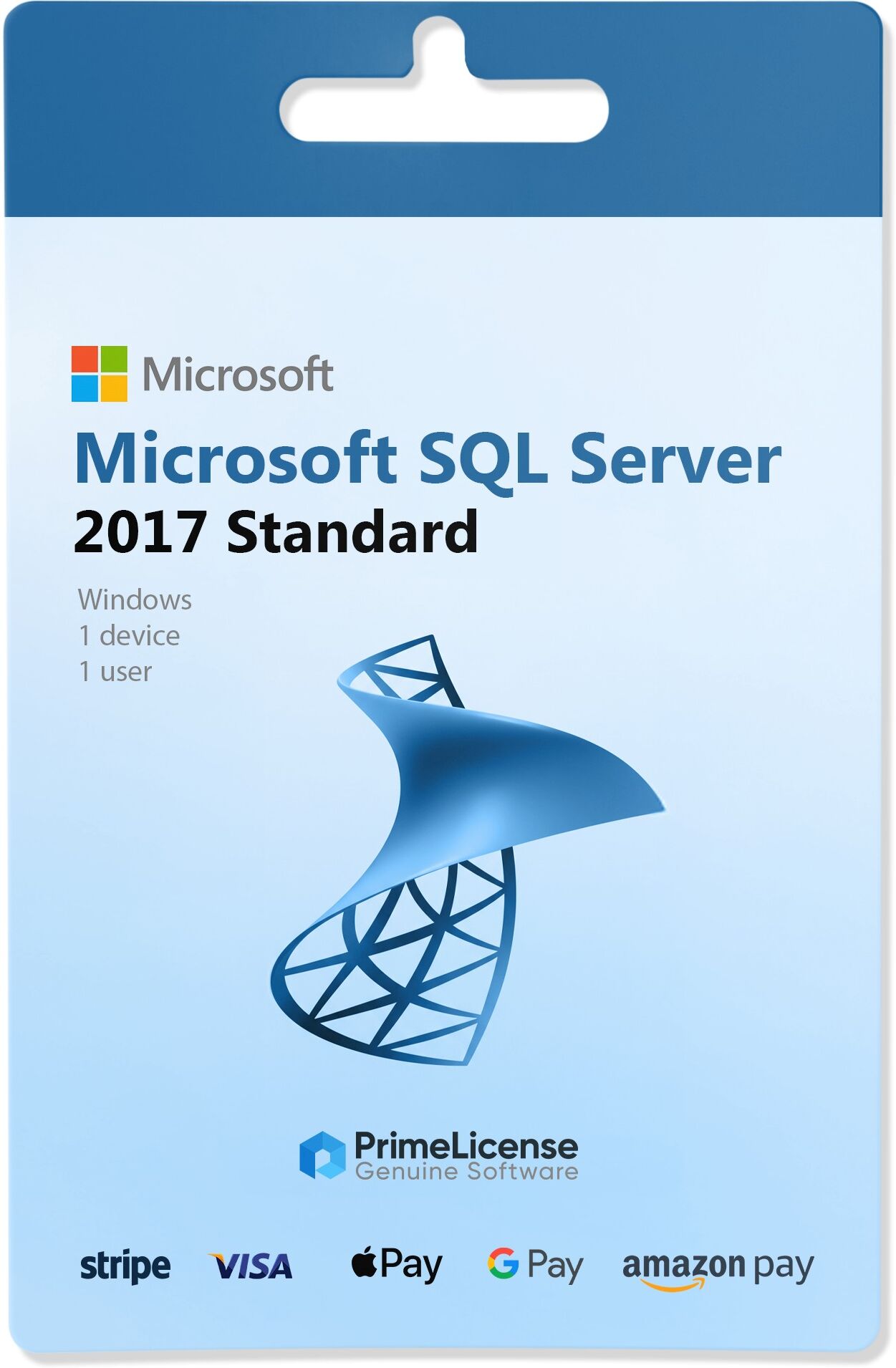
Microsoft Windows SQL Server 2017 StandardSQL Server 2017 (15.x) builds on previous releases to grow SQL Server as a platform that gives you choices of development languages, data types, on-premises or cloud environments, and operating systems. SQL Server 2017 (15.x) introduces Big Data Clusters for SQL Server. It also provides additional capability and improvements for the SQL Server database engine, SQL Server Analysis Services, SQL Server Machine Learning Services, SQL Server on Linux, and SQL Server Master Data Services. SQL Server 2017 features: SQL Server Database Engine. SQL Server Database Engine includes the Database Engine, the core service for storing, processing, and securing data, replication, full-text search, tools for managing relational and XML data, in database analytics integration, and PolyBase integration for access to Hadoop and other heterogeneous data sources, and Machine Learning Services to run Python and R scripts with relational data. Analysis Services. Analysis Services includes the tools for creating and managing online analytical processing (OLAP) and data mining applications. Reporting Services. Reporting Services includes server and client components for creating, managing, and deploying tabular, matrix, graphical, and free-form reports. Reporting Services is also an extensible platform that you can use to develop report applications. Integration Services. Integration Services is a set of graphical tools and programmable objects for moving, copying, and transforming data. It also includes the Data Quality Services (DQS) component for Integration Services. Master Data Services. Master Data Services (MDS) is the SQL Server solution for master data management. MDS can be configured to manage any domain (products, customers, accounts) and includes hierarchies, granular security, transactions, data versioning, and business rules, as well as an Add-in for Excel that can be used to manage data. Machine Learning Services (In-Database). Machine Learning Services (In-Database) supports distributed, scalable machine learning solutions using enterprise data sources. In SQL Server 2016, the R language was supported. SQL Server 2017 (15.x) supports R and Python. Machine Learning Server (Standalone). Machine Learning Server (Standalone) supports deployment of distributed, scalable machine learning solutions on multiple platforms and using multiple enterprise data sources, including Linux and Hadoop. In SQL Server 2016, the R language was supported. SQL Server 2017 (15.x) supports R and Python. SQL Server 2017 Standard edition delivers basic data management and business intelligence database for departments and small organizations to run their applications and supports common development tools for on-premises and cloud, enabling effective database management with minimal IT resources.85,90 £*Shipping: 0,00 £Secure redirect to the provider
-
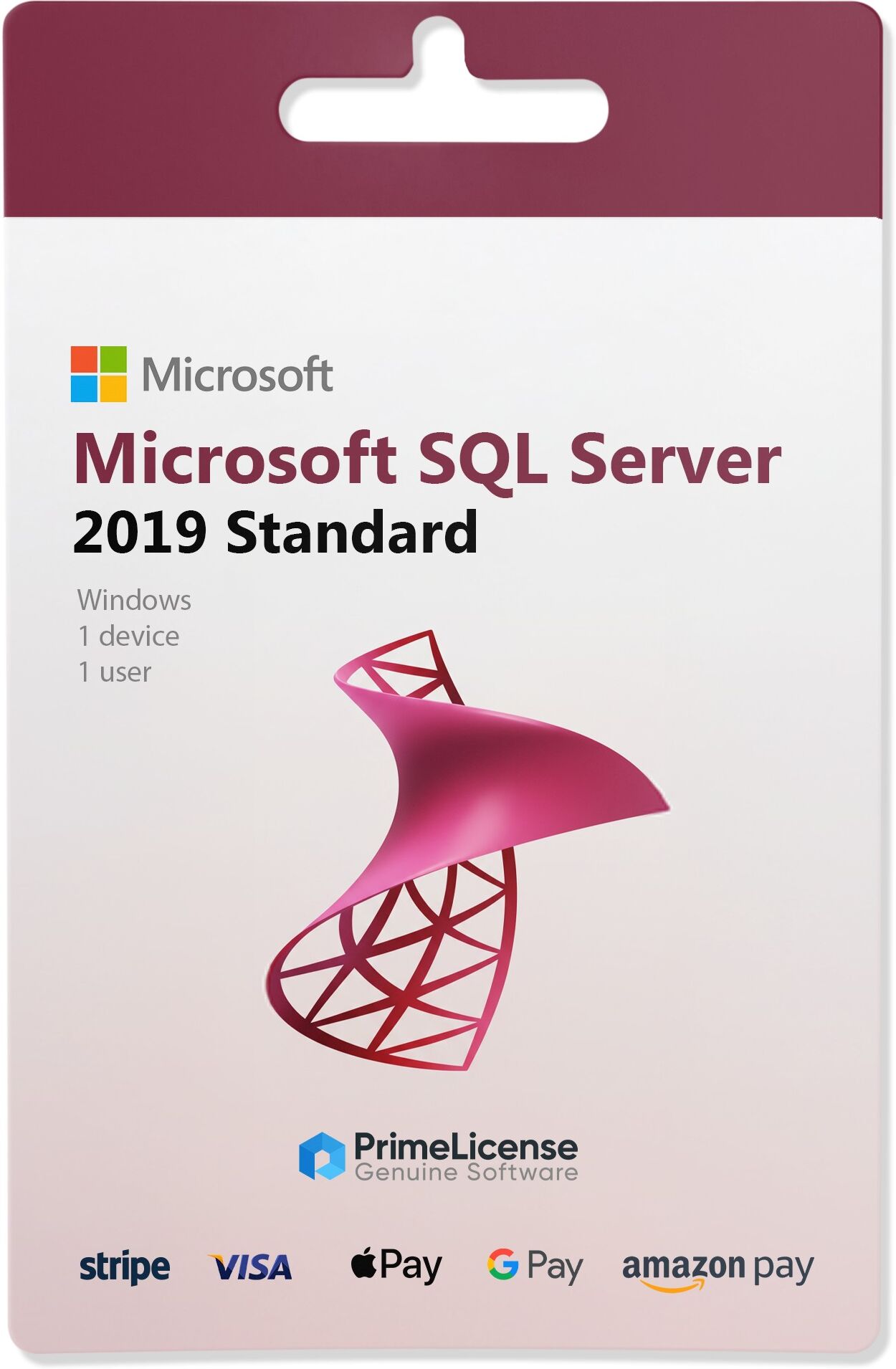
Microsoft Windows SQL Server 2019 StandardMicrosoft sql server 2019 - features and functionality SQL Server 2019 (15.x) represents an advancement over its previous versions, expanding the SQL Server platform with a wide range of choices across development languages, data types, on-premises or cloud environments and operating systems. It also introduces Big Data Clusters for SQL Server, offering additional features and enhancements for several components, including SQL Server Database Engine, SQL Server Analysis Services, SQL Server Machine Learning Services, SQL Server on Linux and SQL Server Master Data Services. Key features of Windows sql server 2019 include: SQL Server Database Engine: The Database Engine is the central service for storing, processing and securing data. It includes replication, full-text search, relational and XML data management tools, integration with analytical databases and PolyBase for accessing Hadoop and other heterogeneous data sources, as well as Machine Learning Services for running scripts in Python and R on relational data. Analysis Services: Analysis Services provides tools for creating and managing online analytical processing (OLAP) and data mining applications, supporting advanced analysis. Reporting Services: Reporting Services provides server and client components for developing, managing and distributing reports in various formats, including tabular, matrix, graphical and freeform. It is also an extensible platform that can be used for the development of reporting applications. Integration Services: Integration Services consists of a set of graphical tools and programmable objects for transferring, copying and transforming data. It also includes Data Quality Services (DQS) to improve data integrity. Master Data Services: Master Data Services (MDS) is SQL Server's solution for master data management, supporting various domains such as products, customers and accounts. It offers hierarchy management, granular security, transactions, data versioning and business rules, with an add-in for Excel for simplified data management. In-database Machine Learning Services: In-database Machine Learning Services allows distributed and scalable machine learning solutions to be implemented, leveraging corporate data. It supports R and Python, extending the capabilities introduced in SQL Server 2016. Machine Learning Server (Standalone): Machine Learning Server (standalone) facilitates the deployment of scalable machine learning solutions on different platforms, including Linux and Hadoop, supporting the R and Python languages as was already the case in SQL Server 2016. The SQL Server 2019 Standard edition provides basic data management and business intelligence database for departments and small organisations to run applications and supports common development tools for local and cloud environments, enabling effective database management with minimal IT resources. Comparison with other Windows Server versions: SQL Server Standard 2019 unlike other Windows Server...119,90 £*Shipping: 0,00 £Secure redirect to the provider
-
What is the normalization of database anomalies?
Normalization of database anomalies is the process of organizing data in a database in such a way that it reduces redundancy and dependency. This helps in improving data integrity and consistency by minimizing the chances of anomalies such as insertion, update, and deletion anomalies. By breaking down data into smaller, manageable tables and establishing relationships between them, normalization ensures that data is stored efficiently and accurately. Overall, normalization helps in maintaining data quality and making the database more robust and reliable. **
-
What is the normalization of a database?
Normalization is the process of organizing data in a database to reduce redundancy and dependency. It involves breaking down a database into smaller, more manageable tables and establishing relationships between them. The goal of normalization is to minimize data duplication and ensure data integrity, making it easier to update and maintain the database. This process typically involves creating primary and foreign keys to link related tables and removing any repeating groups of data. **
-
What is SQL query 2?
SQL query 2 is a structured query language statement used to retrieve data from a database. It typically includes keywords such as SELECT, FROM, WHERE, and ORDER BY to specify the data to be retrieved, the table from which to retrieve it, any conditions that must be met, and the order in which the data should be presented. SQL query 2 can be customized to filter, sort, and manipulate data according to specific requirements. **
-
How can I query data from a MySQL database using Java?
To query data from a MySQL database using Java, you can use the JDBC (Java Database Connectivity) API. First, you need to establish a connection to the MySQL database using the DriverManager class and provide the database URL, username, and password. Then, you can create a Statement or PreparedStatement object to execute SQL queries such as SELECT statements to retrieve data from the database. After executing the query, you can process the ResultSet object to retrieve the data returned by the query. Finally, remember to close the connection and resources after you are done querying the database. **
* All prices are inclusive of VAT and, if applicable, plus shipping costs. The offer information is based on the details provided by the respective shop and is updated through automated processes. Real-time updates do not occur, so deviations can occur in individual cases. ** Note: Parts of this content were created by AI.